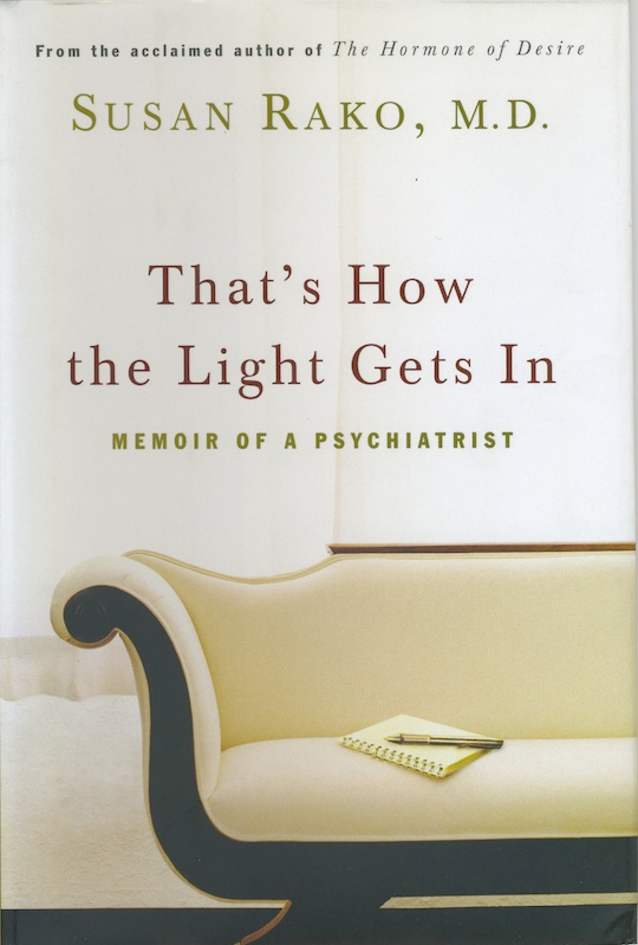
"That's How the Light Gets In"
About
Dear Dr. Rako,
I recently revisited The Hormone of Desire: The Truth About Testosterone, Sexuality, and Menopause, and what remains striking is the clarity and courage with which you challenge long-standing misconceptions about women’s hormonal health. By grounding your arguments in both clinical experience and rigorous engagement with the medical literature, you offer a perspective that is not only informed but deeply necessary.
What sets this book apart is its refusal to oversimplify. You acknowledge that testosterone deficiency in women is real, nuanced, and highly individual, requiring thoughtful assessment rather than blanket assumptions or fear-driven avoidance. Your discussion of dosage, variability, and the absence of a simple dose-response curve underscores an important truth: women’s bodies demand individualized care, not one-size-fits-all protocols.
I was particularly struck by how effectively you address the cultural and professional resistance surrounding testosterone treatment for women. By naming the discomfort and bias that still exist, especially within gynecology and endocrinology, you open space for more honest, evidence-based conversations about sexuality, desire, mood, and vitality during menopause. The book does not sensationalize desire; instead, it restores it as a legitimate component of psychological and physical well-being.
Your dual lens as a psychiatrist and medical thinker gives the work exceptional balance. Sexuality is treated not as an isolated symptom, but as an integrated aspect of identity, mental health, and relational life. In doing so, The Hormone of Desire speaks not only to clinicians, but also to women who are searching for language, validation, and informed advocacy around changes they are experiencing and too often dismissed.
Importantly, the book empowers both sides of the clinical relationship. Physicians are encouraged to engage more deeply and thoughtfully with their patients’ experiences, while readers are equipped with knowledge that allows them to participate actively in decisions about their own care. That combination of authority and accessibility is one of the book’s enduring strengths.
My name is Anna Griggs, and I work with authors whose books challenge medical and cultural assumptions with evidence, nuance, and respect for lived experience. I specialize in helping health-focused nonfiction reach readers who value informed dialogue, clinicians, educators, and women seeking credible resources on menopause, sexuality, and mental health. The Hormone of Desire is particularly well-suited for renewed visibility among professionals and readers engaged in conversations about women’s health, hormone therapy, and sexual well-being.
Thank you for writing a book that asks difficult questions and refuses to reduce women’s desire to pathology or taboo. The Hormone of Desire continues to matter because it insists on complexity, individuality, and honesty, qualities that are still too rare in discussions of women’s hormonal health. I would be glad to help support its continued reach and relevance.
Warm regards,
Anna Griggs
Book Marketing Specialist
Praise for this book
This book is a masterclass in storytelling, blending suspense and emotion in a way that keeps you hooked from the first page to the last.